GAPP for Children With a Trach or Ventilator
A child with a tracheostomy or ventilator needs someone trained close by, day and night. The Georgia Pediatric Program (GAPP), a Georgia Medicaid program, pays for skilled nurses to provide that care at home, at no cost to the family. Here is how it works and how to get started.

Can GAPP Help a Child With a Trach or Vent?
Children with tracheostomies and ventilators are among the children GAPP is designed to serve. To qualify, your child needs:
- Under 21
- Children age out of GAPP on their 21st birthday.
- Georgia Medicaid
- Your child must have Medicaid. Many children with complex medical needs qualify through the Katie Beckett pathway, which looks at the child's needs instead of the parents' income.
- A skilled nursing need
- Trach care, suctioning, and ventilator management are skilled nursing, and every child in GAPP must need medically necessary skilled nursing.
- Physician orders
- Your child's doctor writes the plan of treatment that lists the nursing your child needs.
What In-Home Nursing Covers
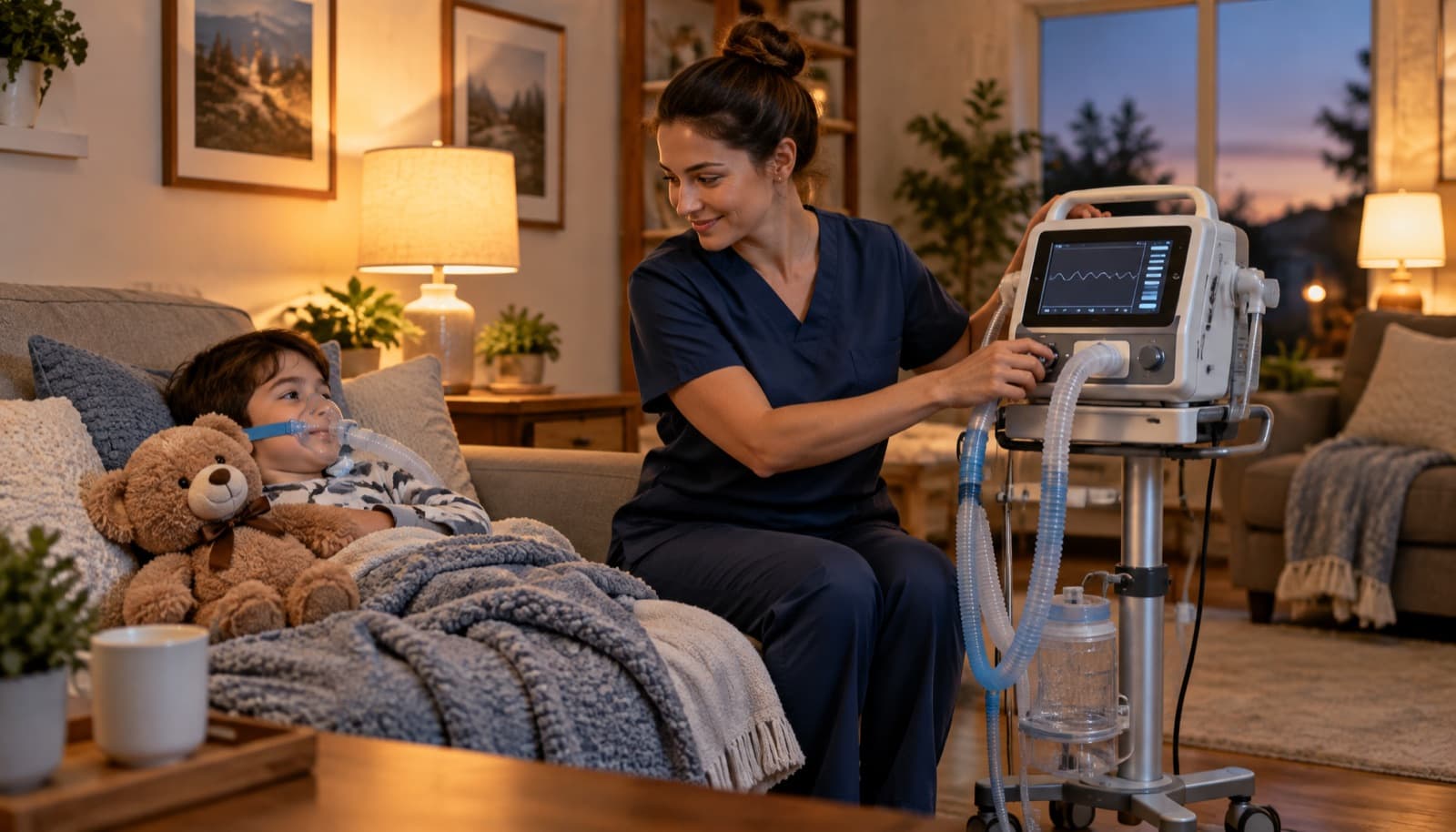
GAPP nurses come to your home for the shifts your child is approved for and handle the skilled care your child's physician ordered, including:
- Trach care, tie changes, and stoma skin checks
- Suctioning and watching for a plugged airway
- Routine and emergency trach changes as ordered
- Ventilator, BiPAP, or CPAP checks and alarm response
- Oxygen and pulse oximetry monitoring
- G-tube feedings and medications on the same shift
How Nursing Hours Are Decided
Set by medical need, not a formula
State reviewers decide how many nursing hours your child gets, based on the physician's orders and records. There is no fixed number for every trach or vent child.
A decision within seven days
Once the nursing agency submits a complete packet, reviewers have seven days to decide. Missing paperwork is the most common cause of delay.
Hours come as a monthly block
Families and the agency decide together how to use them. Many trach and vent families put most of their hours overnight so a parent can sleep.
Reviewed every three to six months
Approvals are renewed using the last three months of nursing notes, so good shift documentation matters at every renewal.
Hours can change with your child
After a hospital stay or a change in condition, the agency can ask for more hours mid-approval with a letter from the physician.
More detail: how GAPP decides nursing hours for trach and vent children.
Can a Parent Be Paid for This Care?
Not for the trach or ventilator care itself. GAPP's Family Caregiver Option can pay a parent who lives with the child only for approved personal care, such as bathing and dressing. Trach and vent care is skilled nursing, and every child in GAPP must have skilled nursing from the agency.
Getting Started From the Hospital
Reach out before discharge
If your child is in the NICU or PICU, start now. A parent, discharge planner, case manager, or physician can send the referral.
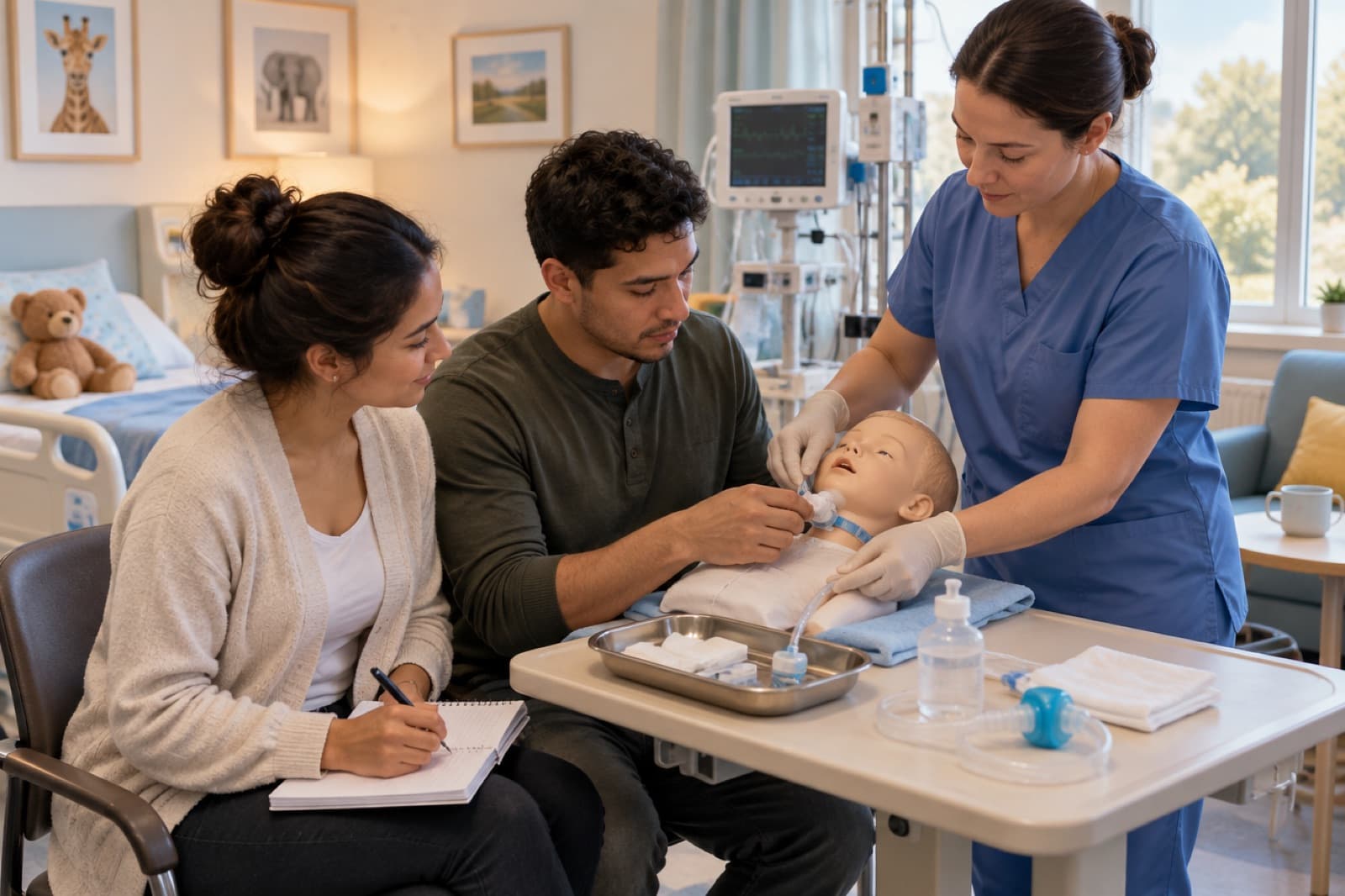
The agency gathers the orders
The nursing agency works with your child's physician on the plan of treatment. A recent discharge summary or progress notes can serve as the plan if they list the hours requested.
GAPP reviews the request
The agency submits the packet, and the state decides on hours. Once approved, services must start within 60 days.
Nurses start at home
The agency matches trained nurses to your child, ideally in time for the first night home.
Coming Home From a Georgia Children's Hospital
Most children who go home on a trach or a ventilator are discharged from a children's hospital. A few things are worth knowing before that conversation starts.
The discharge team will bring up home nursing
A case manager or social worker usually raises it once the care team is planning for home, and may hand you a list of agencies. That list is a starting point, not a requirement.
You choose the agency
Under Medicaid, families generally have the right to choose any enrolled provider. Tell the discharge team which agency you want, by name, and the referral goes there.
Choose before the discharge date
The agency needs time to request GAPP hours and staff the first nights home. The earlier it is involved, the smoother the first week tends to go.
If your child is at Children's Healthcare of Atlanta, Heart and Soul Healthcare, the agency that operates this guide, has written a page on what to expect after a trach or ventilator discharge from Children's Healthcare of Atlanta. It is an independent agency and is not affiliated with the hospital.
Who Provides the Care
GAPP care is delivered by Medicaid-approved nursing agencies. This guide is run by one of them, Heart and Soul Healthcare, which cares for children with trachs and ventilators today:
- Nurses trained in trach care, suctioning, trach changes, and ventilator management
- Referrals accepted directly from hospital discharge planners and case managers
- A registered nurse oversees every child's care, with on-call support after hours
Heart and Soul Healthcare currently serves Fulton, DeKalb, Cobb, Clayton, Henry, Gwinnett, Fayette, Douglas, Forsyth, Rockdale, Cherokee, Paulding, Bartow, Newton, Spalding, Coweta, Carroll, Barrow, Gilmer, and Pickens counties. If you live elsewhere in Georgia, reach out anyway and you will get an honest answer about whether your child's care can be staffed.
Trach and Ventilator Questions
Does GAPP cover a child who is on a ventilator full time?
Yes. GAPP pays for in-home skilled nursing for medically fragile Georgia children under 21, and ventilator care is skilled nursing. The number of hours is approved one child at a time based on medical need, so a child who needs the ventilator around the clock is reviewed on that basis.
My child has a trach but no ventilator. Can we still get GAPP nursing?
Often, yes. Tracheostomy care and suctioning are skilled nursing tasks on their own. Whether your child qualifies, and for how many hours, depends on the physician's orders and the state's review of your child's needs.
Does GAPP cost anything for families?
No. Approved GAPP services are covered by Georgia Medicaid at no cost to the family.
Can a parent be paid to provide trach or ventilator care?
No. Through the Family Caregiver Option, a legally responsible family member who lives with the child can be paid only for approved personal care, such as bathing and dressing. Trach and ventilator care is skilled nursing, and every child in GAPP must have skilled nursing from the agency.
How soon can nursing start after my child leaves the hospital?
It depends on how quickly the paperwork comes together. Reviewers decide within seven days of a complete packet, and services must begin within 60 days of approval. Starting the referral before discharge gives the agency the most time to have nurses ready.
What happens if my child is weaned off the ventilator or decannulated?
The agency submits a change request so the hours match your child's new needs. GAPP allows these requests to be expedited when a child's condition improves.
Who runs this website?
This site is an independent family guide operated by Heart and Soul Healthcare, a Medicaid-enrolled GAPP nursing agency. It is not a government website. For official program questions, contact the Georgia Department of Community Health at GAPP.Inquiries@dch.ga.gov.